
Localizing Emergency Water Purification
It has been said that we can survive only three weeks without food, three days without water, and three minutes without air. While this is a generalization, it highlights the urgency of clean drinking water over food. The World Health Organization estimates that over 1.5 million people die each year from illnesses resulting from unsafe water supplies.
When a disaster is localized, emergency responders rely on shipments of bottled water from outside the affected area. There have been times in recent history, however, that sufficient amounts of bottled water could not be transported to everywhere it was needed in the amounts needed within the time needed. Storing bottled water locally is impractical not only because of spacial requirements, but also because the of chlorine tends to break down over time and the bottles themselves begin to leak.
My plan does not replace the current practice of loading pallets of bottled water onto tractor trailers and driving them to numerous distribution centers. It bridges the distribution gap by empowering currently existing emergency responders at the local level to purify water for distribution.
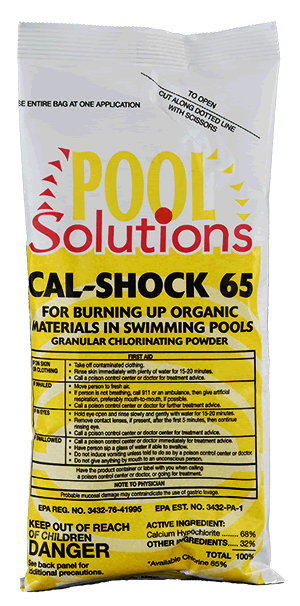
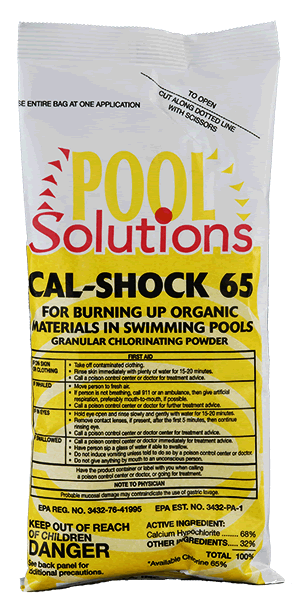
Calcium Hypochlorite, commonly known as pool shock, retails for about $3 a pound. Each pound will chlorinate about 10,000 gallons of contaminated water making it safe to drink. It is easily stored and does not lose effective with age as chlorine bleach does. Local fire stations can store any amount necessary to meet the needs of their service area. Most fire departments have at least one water truck which holds thousands of gallons of water and has an on-board pump that can refill water tanks from ground water sources. In many communities the local fire station is already designated as a shelter so the increased burden to emergency responders is minimal.
0 comments